Discover Aizanoi Ancient City in Kutahya, home to a magnificent Temple of
Zeus, a unique Roman theatre-stadium complex and an ancient marketplace.
When travelers think of ancient cities in Turkey, Ephesus, Pergamon and
Troy often come to mind.
But hidden in the peaceful countryside of Kutahya is an extraordinary
archaeological site that deserves far more attention.
Welcome to Aizanoi Ancient City, located in the small town of Cavdarhisar.
Once an important Roman city filled with temples, public buildings and busy
marketplaces, Aizanoi now offers visitors a fascinating journey into the past.
And unlike Turkey's most famous archaeological destinations, its atmosphere
feels remarkably different.
The Magnificent Temple of Zeus
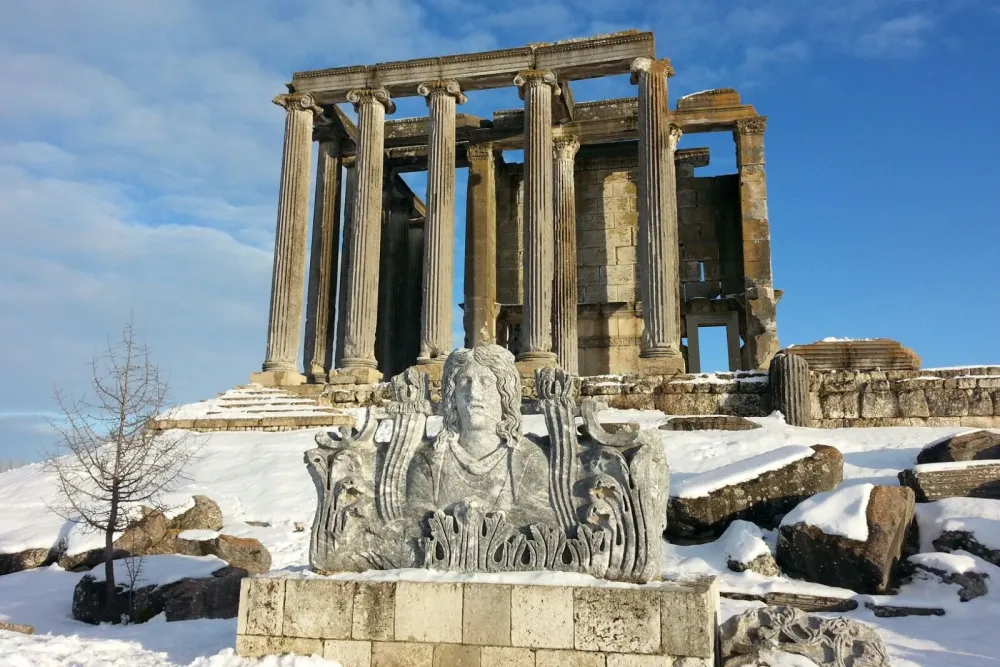
The first thing that captures your attention is the magnificent Temple of
Zeus.
Built during the Roman period, it is considered one of the best-preserved
temples dedicated to Zeus in the ancient world.
Its towering columns, impressive stonework and unusual vaulted space
beneath the temple reveal the architectural ambition of ancient Aizanoi.
Standing before this remarkable structure, it's easy to imagine how
important the city once was.
Yet the temple is only the beginning.
A Theatre and Stadium Unlike Any Other
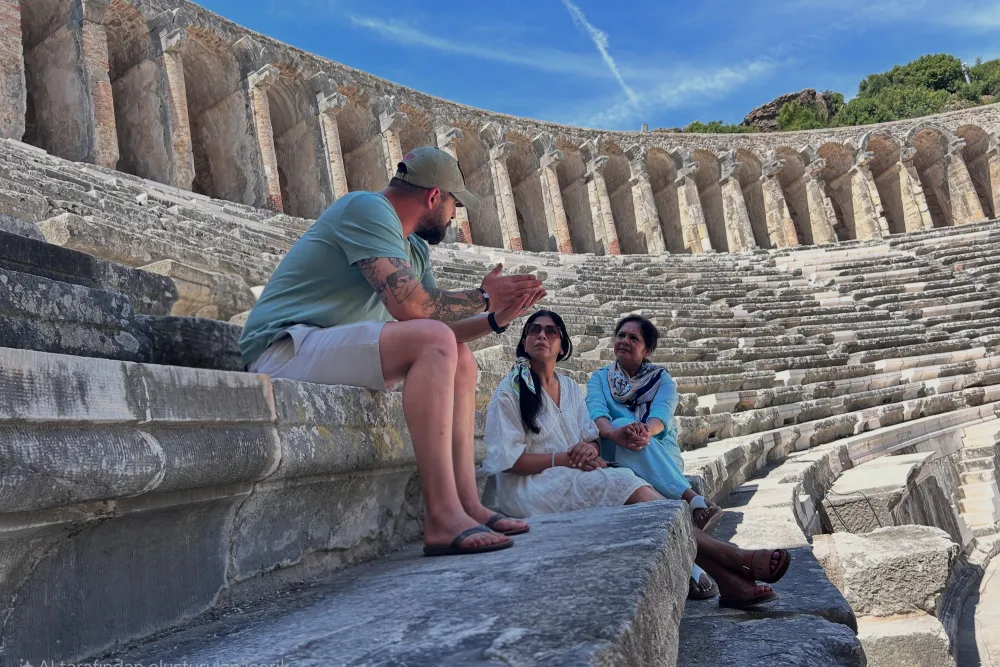
Aizanoi contains one of the most unusual architectural arrangements in the
ancient world.
Its theatre and stadium were constructed directly beside one another,
forming a remarkable complex.
The theatre could accommodate approximately 20,000 spectators, while the
stadium had a capacity of around 13,500. Imagine the atmosphere thousands of
years ago.
Crowds gathering for theatrical performances, sporting competitions and
public entertainment.
Today, the surviving structures offer a very different experience: an
opportunity to explore the remains of a once-thriving Roman city.
Bee Travel Tip: Don't limit
your visit to the Temple of Zeus. Allow enough time to explore the
theatre-stadium complex and the ancient marketplace, which reveal completely
different aspects of Roman life.
An Ancient Marketplace with a Surprisingly Modern Story
Perhaps Aizanoi's most unexpected story comes from its Macellum, an ancient
marketplace.
In AD 301, Roman Emperor Diocletian introduced an empire-wide decree
establishing maximum prices for various goods and services in an attempt to
control inflation.
Remarkably, inscriptions recording these prices survive at Aizanoi.
Think about that for a moment. Nearly 1,700 years ago, people were already
struggling with rising prices, and governments were trying to control them.
Some problems, it seems, are not particularly modern.
Why Aizanoi Deserves More Attention
Aizanoi has been on the UNESCO World Heritage Tentative List since 2012,
reflecting its historical and architectural significance. Yet it remains
outside the usual itineraries of many international visitors.
For travelers interested in archaeology, Roman history or discovering
lesser-known destinations, that makes it especially appealing.
Bee Travel Insight: Aizanoi
reminds us that Anatolia's ancient history isn't limited to the famous cities
along the Aegean coast. Important centers of Roman culture and commerce also
flourished deep within the Anatolian countryside.
Is Aizanoi Worth Visiting?
Absolutely, particularly if you're exploring western or inland Anatolia and
have time for a historical detour.
However, it isn't somewhere we would recommend squeezing into an already
crowded itinerary.
Its location makes it better suited to a thoughtfully planned road journey.
Bee Travel Recommendation:Consider Aizanoi as part of a longer cultural itinerary through western
Anatolia. A knowledgeable guide can help bring the temple, marketplace and
ancient public buildings to life.
Beyond the Classics
Some ancient cities impress visitors through their international fame.
Others leave you wondering why they aren't more widely known.
Aizanoi belongs to the second group.
At Bee Travel Turkey, we believe exploring Turkey means looking beyond its
most familiar destinations and discovering the extraordinary stories waiting
between them.
And sometimes, those stories begin with a Roman temple standing quietly in the Anatolian countryside.