Explore Catalhoyuk
in Turkey, one of the world’s oldest known settlements and a UNESCO World
Heritage Site revealing early human civilization.
Some archaeological sites tell the story of empires, others go even further
back — to the beginning of settled human life itself. Catalhoyuk is one of those places.
A Window Into Early Human Civilization
Located in central Turkey near Konya, Catalhoyuk is considered
one of the oldest and most important Neolithic settlements ever discovered. Dating
back more than 9,000 years, the site offers a rare glimpse into a time when
humans were beginning to transition from: hunting and gathering
to, permanent community living.
This is why Catalhoyuk Turkey holds such global
archaeological importance.
A City Without Streets
One of the most fascinating aspects of Catalhoyuk is how differently people lived.
There were: no streets, no separate public roads, no
front doors in the modern sense. Homes were built directly beside one another. People
moved across rooftops and entered houses through openings in the ceiling using
ladders. This unique layout makes Catalhoyuk ancient settlement unlike almost any other site in the world.
Life Inside the Houses
The homes of Catalhoyuk were more than simple shelters. Inside,
archaeologists discovered: wall paintings, burial platforms, symbolic
decorations, traces of everyday life. Families lived, cooked, slept, and buried
their dead within the same spaces. The connection between life, ritual, and
home was deeply intertwined.
Art, Symbolism, and Ritual
Catalhoyuk also reveals something extraordinary about early
humanity: the desire to create meaning.
The site contains: home of the earliest known wall
paintings, symbolic animal imagery, ritual objects and figurines. These
discoveries suggest that spirituality and artistic expression were already
central parts of human life thousands of years ago.
A Different Kind of Ancient Site
Unlike monumental ruins from later civilizations, Catalhoyuk feels quieter and more subtle. There are no giant temples or towering
columns.
Instead, the site invites visitors to imagine: ordinary
lives, daily routines, human beginnings. Its power comes from intimacy rather
than scale.
A UNESCO World Heritage Site
Today, Catalhoyuk is
recognized as a UNESCO World Heritage Site because of its exceptional
contribution to understanding early civilization.
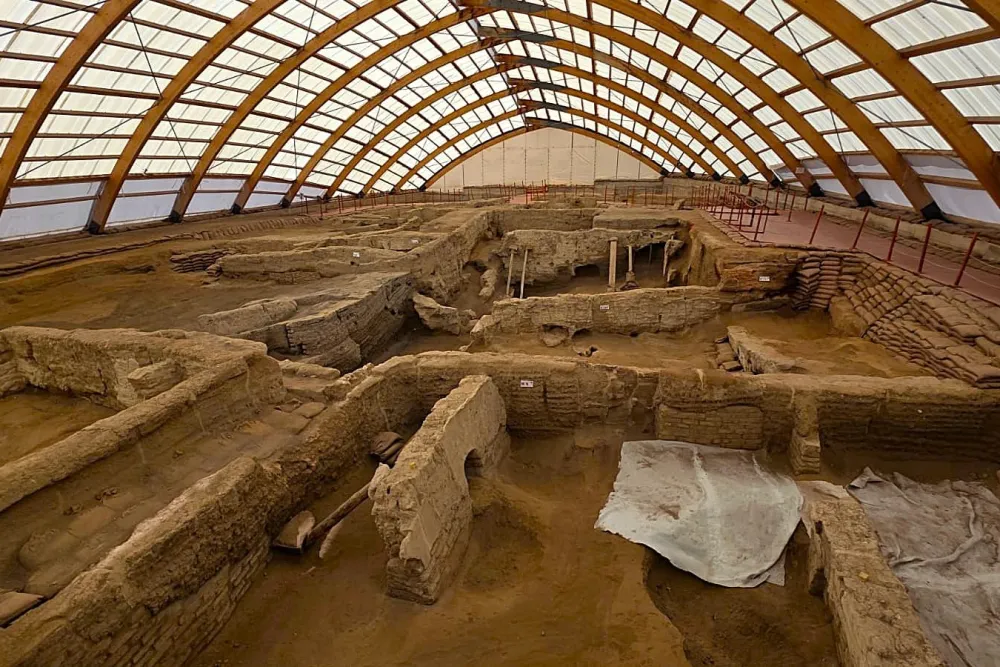
The protective shelters above the excavation areas
allow visitors to observe: ongoing archaeological work, reconstructed house
sections, layers of ancient habitation. The site still continues to reveal new
discoveries.
A Photographer’s Perspective
Your photos will naturally capture the earthy textures and atmosphere of
the site.
Catalhoyuk offers: layered
excavation views, geometric patterns of mudbrick structures, soft natural tones,
strong contrasts between archaeology and open landscape.
Especially focus on: excavation details, textures
of ancient walls, wide shots beneath protective roofs, perspective lines across
the dig site.
The Landscape Around Catalhoyuk
The surrounding plains of central Anatolia feel
open and timeless. This landscape helps visitors imagine what life may have
looked like thousands of years ago: wide horizons, dry grasslands, isolated
communities shaped by nature. The environment becomes part of the story itself.
Why Catalhoyuk Still Matters
Catalhoyuk is not important because it is grand. It matters
because it asks fundamental questions:
-How did humans begin living together?
-How did community shape identity?
-When did art, ritual, and memory first become part of daily life?
Very few places allow us to reflect on these beginnings so directly.
Final Thoughts
Some historical sites show the height of civilization. Catalhoyuk shows its
foundations.
Before kingdoms - Before empires - Before written history
Just people, learning how to live together — and unknowingly shaping the future of humanity.