When you step into Istanbul’s historic Sultanahmet district, you are not simply entering a square — you are standing in what was once the beating heart of an empire.
Today known as Sultanahmet Square, the Hippodrome of Constantinople was for centuries the social, political, and sporting center of the Byzantine world.
For travelers exploring Istanbul’s Old City, this open-air space may look calm and elegant. Yet nearly 1,700 years ago, it roared with the thunder of chariot races, imperial ceremonies, and crowds of over 30,000 spectators.
- A Stadium at the Center of an Empire
The original structure was begun in the 3rd century AD during the Roman period and later expanded by Emperor Constantine the Great after he founded Constantinople as the new capital of the Roman Empire in 330 AD.
Modeled after Rome’s Circus Maximus, the Hippodrome was designed for chariot races — the most popular and politically charged entertainment of the era. Rival factions, known as the Blues and the Greens, were more than sports teams; they represented deep social and political alliances.
At its height, the Hippodrome was not just a stadium — it was a stage for imperial power. Emperors addressed the public from a private imperial box connected directly to the Great Palace.
- Surviving Monuments of the Hippodrome
Although the stadium structure itself no longer stands, several monuments from its central spine (the “spina”) remain in place today.
- 1. The Obelisk of Theodosius
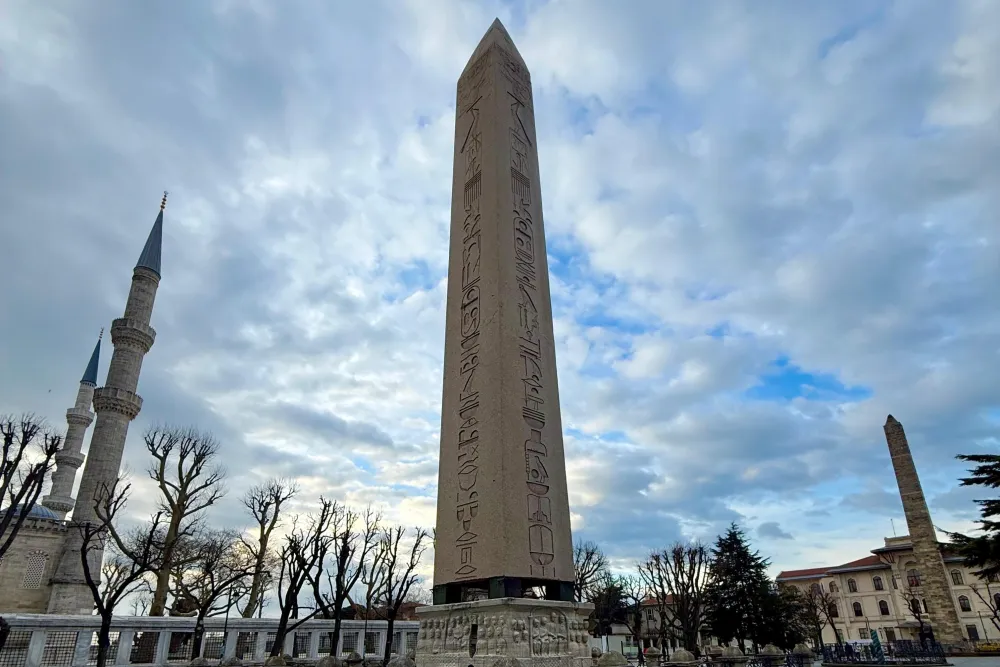
Obelisk of Theodosius
Originally erected in Egypt in the 15th century BC and later brought to Constantinople in 390 AD, this pink granite obelisk stands as one of the oldest monuments in Istanbul.
Its marble base depicts Emperor Theodosius watching the games — a rare visual record of life in the Hippodrome.
- 2. The Serpent Column
Serpent Column
Dating back to 479 BC, this bronze column was originally created in Delphi to celebrate a Greek victory over the Persians. Constantine later transported it to his new capital.
Although the serpent heads are missing, the twisted bronze shaft still symbolizes the city’s deep connection to the ancient Greek world.
- 3. The Walled Obelisk
Walled Obelisk
Unlike the Egyptian obelisk, this monument was constructed locally in the 10th century. Once covered in bronze plates, it would have shimmered impressively during ceremonies and races.
- More Than Just Races
The Hippodrome was also the site of one of Byzantine history’s most dramatic events — the Nika Revolt of 532 AD. What began as factional unrest during chariot races escalated into a massive uprising that nearly overthrew Emperor Justinian.
Standing in Sultanahmet today, it’s difficult to imagine the intensity of those moments. Yet beneath your feet once lay the track where political tensions, sport, and imperial authority collided.
- The Hippodrome Today
Now part of modern Sultanahmet Square, the Hippodrome sits between some of Istanbul’s most iconic landmarks:
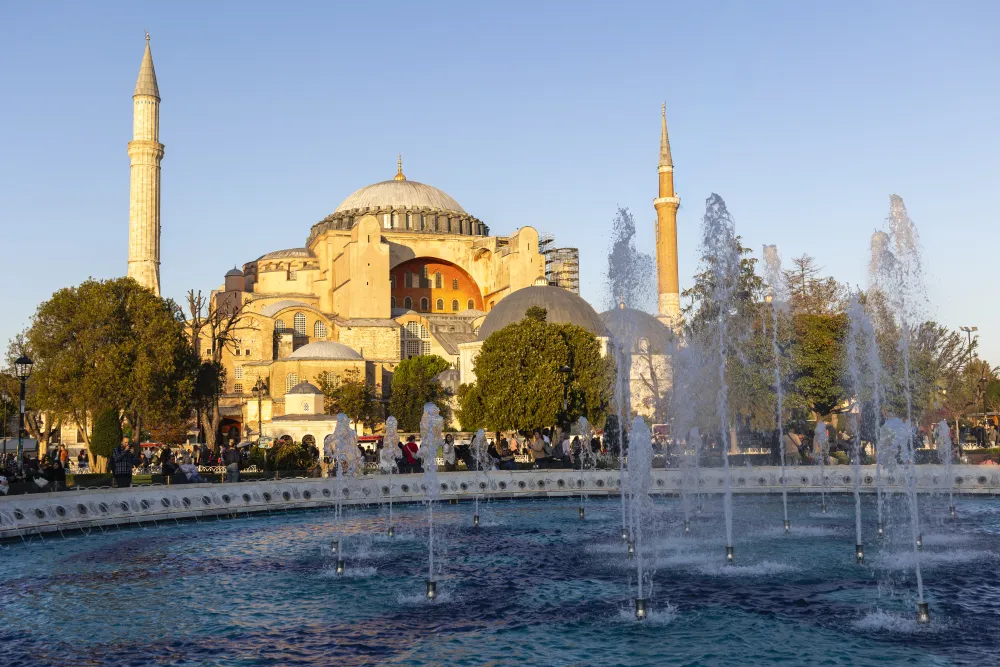
Hagia Sophia
Blue Mosque
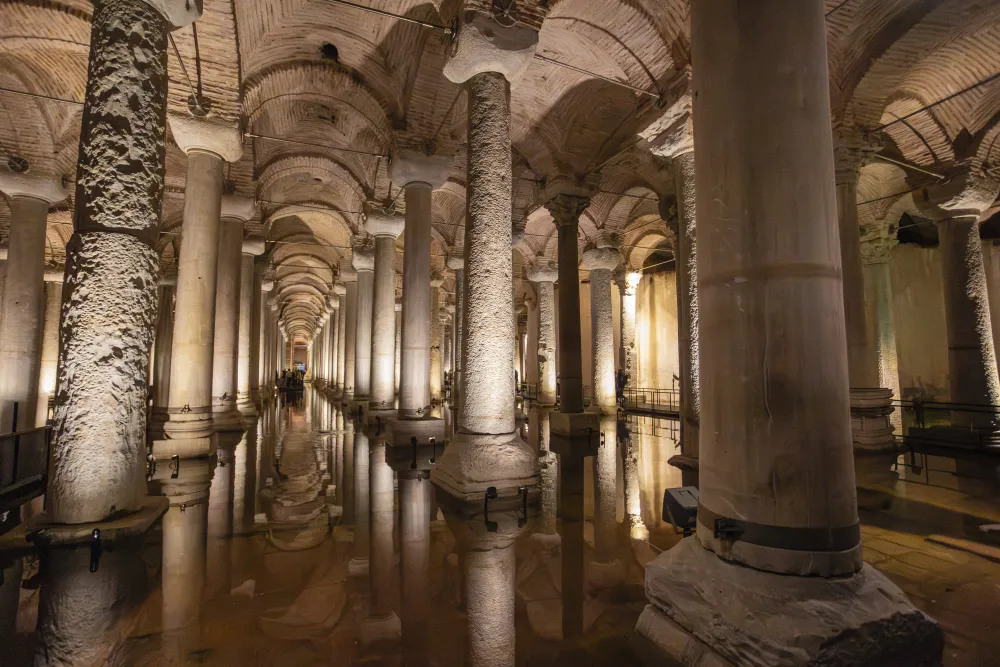
Basilica Cistern
This makes it an essential stop for anyone exploring the Old City on foot. It requires no entrance ticket, and its open layout allows visitors to walk freely among monuments that once defined imperial ceremony.
- Why Visit the Hippodrome?
If you are planning a trip to Istanbul, the Hippodrome offers:
✔ A direct connection to Roman and Byzantine history
✔ Monuments spanning over 3,000 years of civilization
✔ A peaceful yet historically powerful atmosphere
✔ A central location within Istanbul’s UNESCO-listed Old City
Early morning or late afternoon visits are ideal, when softer light enhances the textures of the ancient stone and the square feels less crowded.
- Experiencing the Hippodrome with Bee Travel Turkey
At Bee Travel Turkey, we do not treat the Hippodrome as just a square you pass through on the way to Hagia Sophia. Our professional guides bring the stadium back to life — explaining how chariot races worked, how factions influenced politics, and how emperors used spectacle to maintain power.
When combined with Hagia Sophia, the Blue Mosque, and the Basilica Cistern, the Hippodrome becomes part of a seamless narrative — from pagan Rome to Christian Byzantium to Ottoman Istanbul.
Because in Istanbul, history is not behind museum glass.
It is under your feet.