Discover the
story of Medusa, her symbolism in mythology, and the fascinating Medusa reliefs
and stone carvings found in ancient sites across Turkey.
Some figures from mythology disappear into history, others continue to
appear centuries later — carved into stone, hidden in ruins, and surrounded by
mystery. Medusa is one of them.
With her serpentine hair and legendary gaze, Medusa remains one of the most
recognizable figures of the ancient world. And surprisingly, some of the most
fascinating Medusa carvings can still be found throughout Turkey today.
Who Was Medusa?
In Greek mythology, Medusa was one of the three
Gorgons. According to the most well-known version of the story: her hair was
transformed into snakes, her gaze could turn people to stone, she became both
feared and symbolic.
Over time, Medusa evolved beyond mythology and became an artistic and
protective symbol used across the ancient Mediterranean world. This is why Medusa
mythology appears in architecture, sculpture, mosaics, and temples.
Medusa as a Protective Symbol
Although Medusa is often remembered as a monster, ancient civilizations
frequently used her image as protection.
Her face was believed to: ward off evil, protect
sacred spaces, frighten away negative forces
This symbolic use became extremely common during: Greek
periods, Roman periods, Byzantine periods. The Medusa symbol was often
placed on buildings, tombs, and important structures.
The Famous Medusa Heads in Istanbul
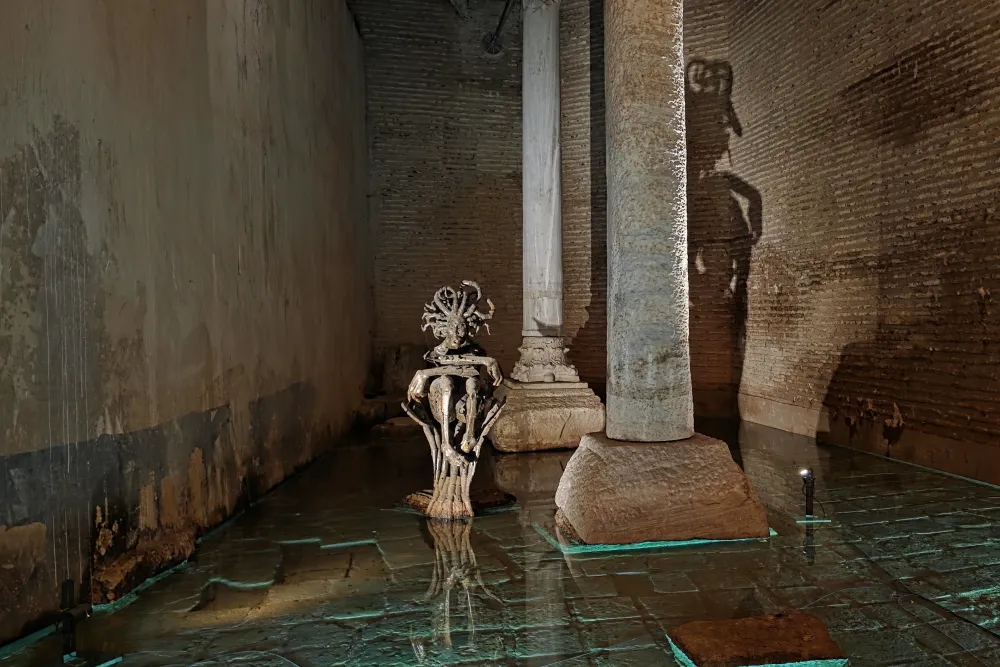
One of the most famous Medusa representations in Turkey can be found
beneath Basilica Cistern.
Hidden among the columns of the underground reservoir are two enormous
Medusa heads.
What makes them especially fascinating: one is
positioned sideways, the other upside down. Their exact placement remains a
mystery.
Some historians believe the orientation was
intended: to neutralize Medusa’s power or simply to reuse stone from earlier
Roman structures. Today, the Medusa heads in Basilica Cistern are among
the most photographed historical details in Istanbul.
Medusa Reliefs in Ancient Cities of Turkey
Beyond Istanbul, Medusa appears throughout Anatolia in surprising places.
Ancient cities and archaeological sites contain: stone
reliefs, temple decorations, sarcophagus carvings, architectural fragments.
Examples can be found in regions connected to: Ephesus,
Aphrodisias, Perge, Side
These Medusa depictions reveal how widespread her symbolism became across
the Roman world.
Medusa and Roman Architecture
Roman architects often included Medusa imagery in decorative programs. Why?
Because Medusa represented: protection, power, divine
warning
Her face frequently appeared: above entrances, on
shields, within decorative stone carvings
This explains why visitors still encounter Medusa reliefs in Turkeycenturies later.
The Mystery Behind Her Expression
One reason Medusa remains fascinating is that her representation changed
over time.
Early depictions often appear: frightening, aggressive,
monstrous
Later versions became: more human, more beautiful,
almost melancholic
This transformation reflects changing attitudes toward mythology and
symbolism.
Why Medusa Continues to Inspire Artists
Even today, Medusa remains one of the most referenced figures from
classical mythology.
She appears in: modern art, fashion, literatüre, photography.
Because Medusa represents more than fear.
She also symbolizes: transformation, resilience, mystery
Her story continues to evolve with every generation.
A Photographer’s Perspective
Medusa carvings are incredibly rewarding subjects for photography.
The best images often focus on: facial details, weathered
stone textures, shadows within carvings, contrasts between mythology and
architecture. Especially in historical sites, natural light can create dramatic
depth around Medusa reliefs.
Between Myth and History
One of the most fascinating things about Medusa is how she exists between
worlds.
She is: mythology, art, architecture, symbolism at
the same time.
And perhaps that is why her image survived long after the civilizations
that created it disappeared.
Why Turkey Is One of the Best Places to Discover Medusa
Turkey contains extraordinary layers of: Greek
history, Roman history, Byzantine history
Because of this, ancient symbols like Medusa remain visible throughout the
country. From underground cisterns in Istanbul to archaeological ruins across
Anatolia, visitors continue to encounter her face unexpectedly. Few countries
preserve Medusa-related historical sites as richly as Turkey.
Final Thoughts
Some myths remain only in books. Medusa remains in stone. Hidden beneath cities, carved into ancient ruins. Watching silently through centuries of history and perhaps that mystery is exactly why people continue searching for her today.