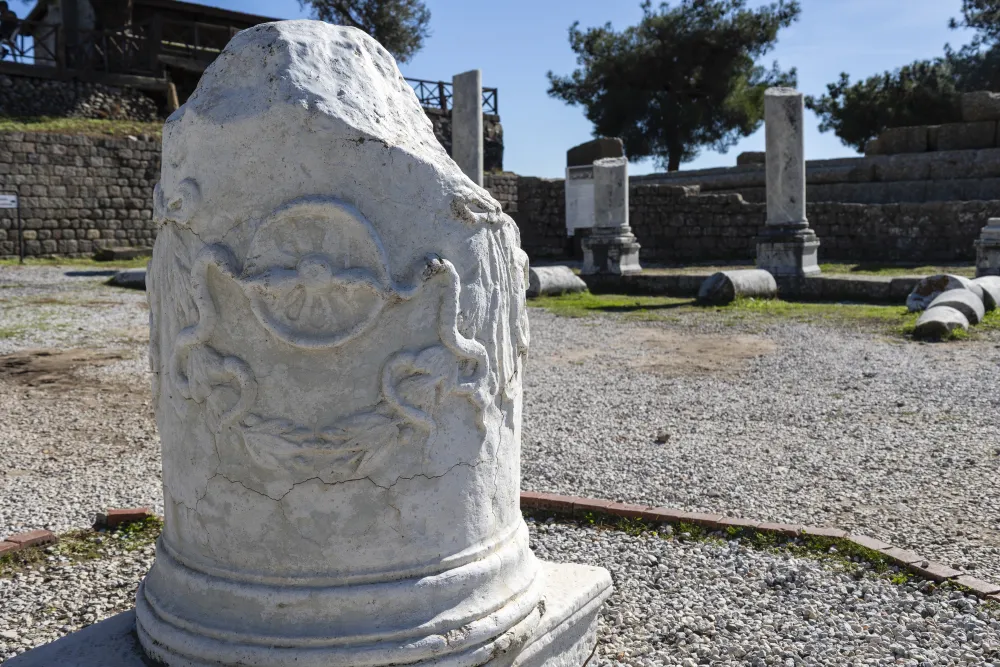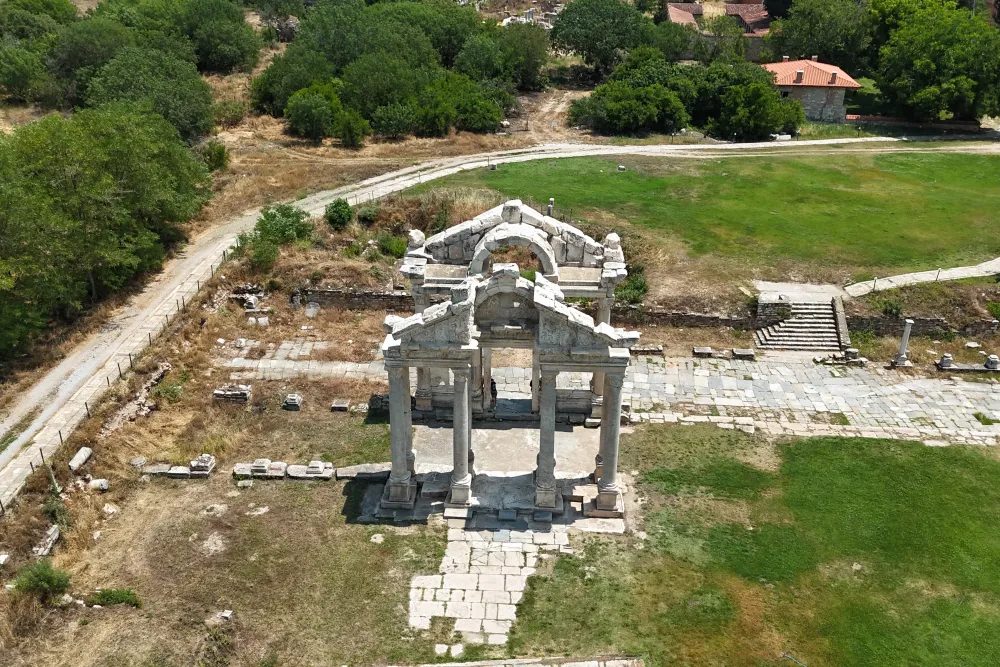
The road to Perge is quiet now. Olive trees line the way, cicadas hum in the distance, and the Taurus Mountains hold their breath behind you. Then the columns appear—row after row—like an audience waiting for a story to begin.
Perge was never meant to be whispered about. In its prime, it was a city that expected to be seen.
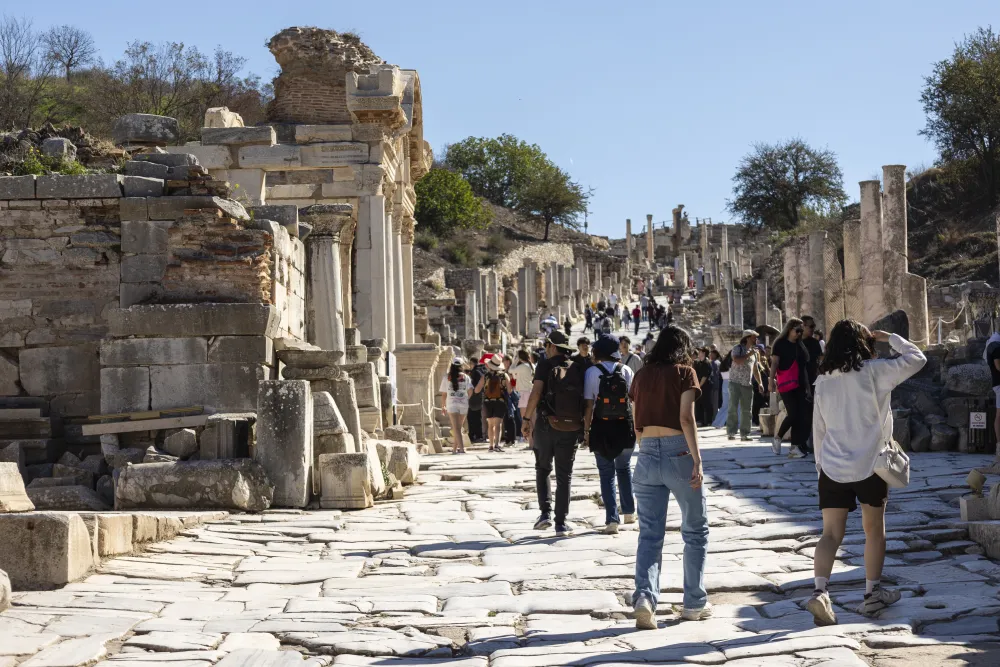
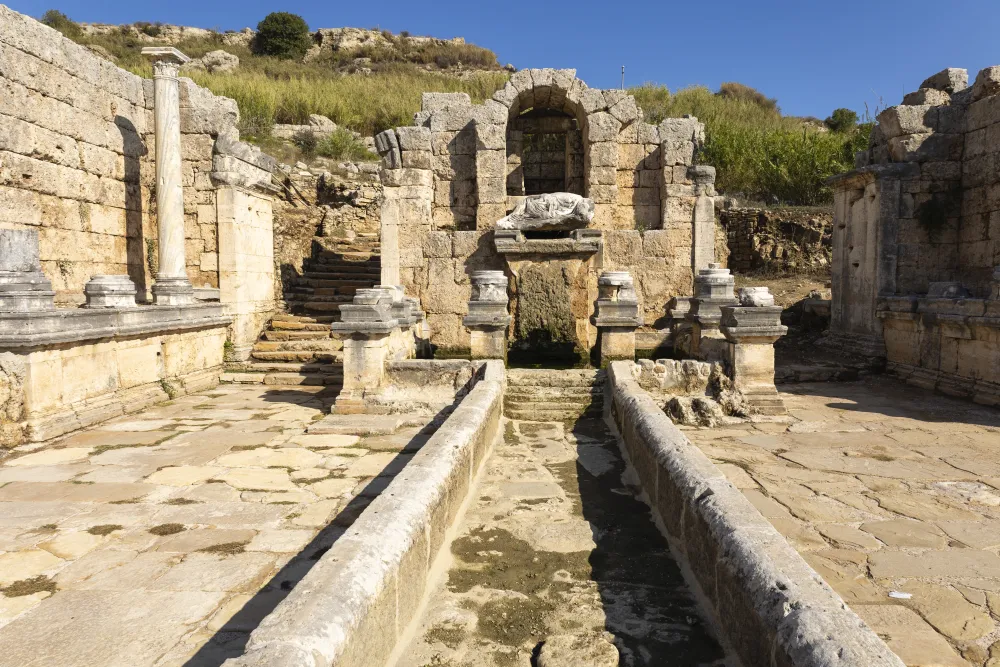
As you pass through the Hellenistic Gate, the world shifts. The stones beneath your feet once echoed with sandals, chariots, and conversation. Ahead stretches the grand colonnaded street, divided by a water channel that once carried fresh mountain water through the heart of the city. This wasn’t decoration—it was daily life flowing openly, confidently, through the streets.
Walk slowly here. Perge rewards patience.
To your left and right rise the remains of shops, baths, and public buildings. You can almost imagine the clatter of trade, the debates of philosophers, the laughter drifting out of bathhouses heavy with steam. Unlike many ancient cities that feel frozen in time, Perge feels paused—like it might resume at any moment.
Further on, the stadium opens up, vast and commanding. It could hold thousands, and it did. Athletic contests, public events, and celebrations once pulled the entire city together here. The stone seating still curves perfectly, a reminder that community mattered as much as spectacle.
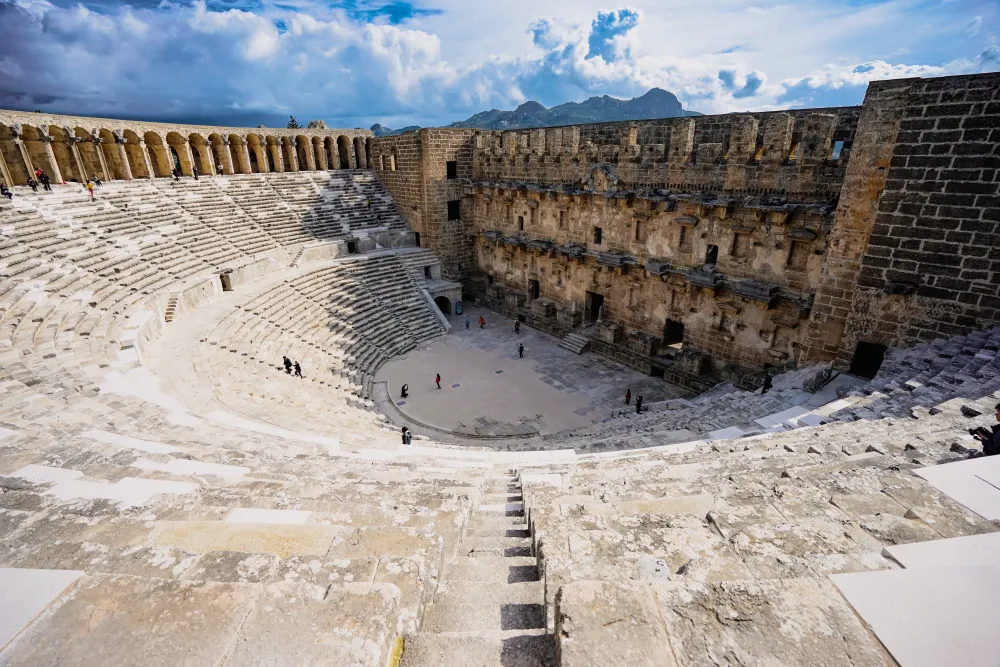
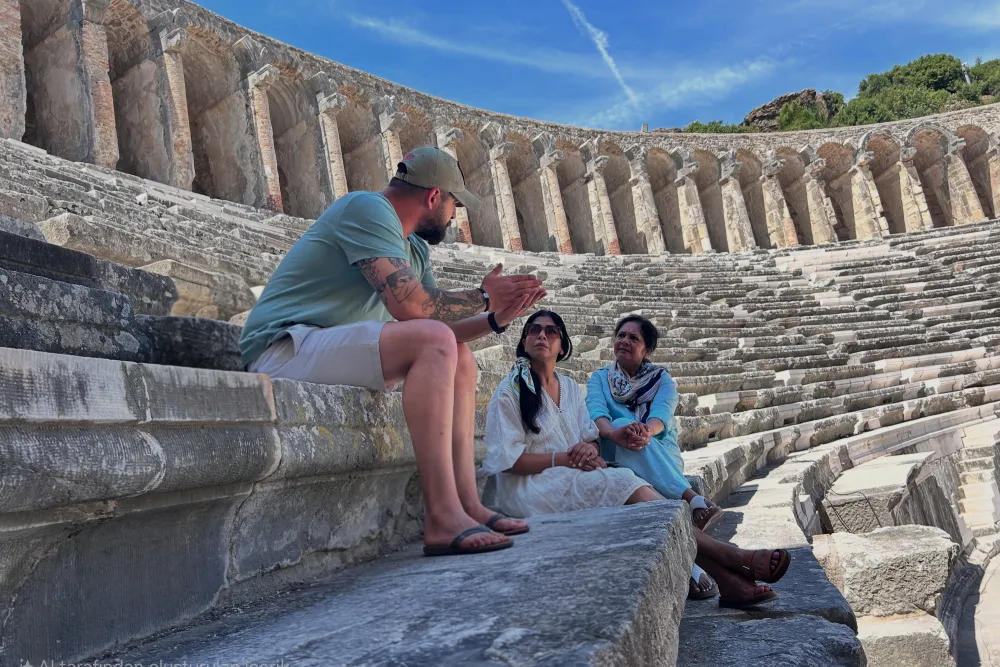
And then there’s the theater.
Standing before it, you sense that Perge understood drama—not just on stage, but in life. This was a city shaped by ambition and culture, by Roman grandeur layered carefully over earlier Greek foundations. Even the ruins seem aware of their own elegance.
One of Perge’s quiet triumphs is balance. Power and beauty. Order and movement. Urban design that served both the practical and the poetic. This is why Perge doesn’t overwhelm—it invites.
As the sun lowers, shadows stretch long across the columns. The stones warm under the fading light, and suddenly Perge feels intimate. Personal. It stops being an archaeological site and becomes a conversation—between past and present, between those who built it and those who walk it now.
Perge doesn’t ask you to imagine history.
It lets you step into it.