Discover the
difference between fresco and secco painting techniques, their history, and how
these ancient artworks survived in places like Cappadocia and some other places
in Turkey.
Some artworks are painted on canvas, others become part of the wall itself.
This is the world of fresco and secco art — ancient painting
techniques that transformed architecture into storytelling.
Paintings That Became Part of History
Across Turkey, especially in historic churches and monasteries, walls still
carry traces of color created centuries ago. These paintings were not simply
decoration.
They were: spiritual expression, visual
storytelling, a way to communicate belief and culture
Many of these surviving works were created using fresco and secco
techniques.
What Is Fresco?
The word fresco comes from the Italian word meaning “fresh.”
In fresco painting:
-Pigments are applied directly onto wet plaster
-The colors become part of the wall as the plaster dries
This technique makes frescoes: Durable, long-lasting,
deeply connected to the surface itself
True fresco art requires speed, precision, and planning. Once the
plaster dries, changes become nearly impossible.
What Is Secco?
Unlike fresco, secco painting is applied onto dry plaster.
Artists used:
-Mineral pigments
-Egg mixtures
-Natural binders
This allowed for: Finer details, easier
corrections,more flexibility in painting
However, secco paintings are often more fragile over time because the
pigment remains on the surface rather than inside it. This is the key
difference between fresco vs secco techniques.
Why These Techniques Matter
When you stand inside ancient churches in
Cappadocia or Anatolia, you are not only looking at paintings. You are looking
at: Centuries of survival, layers of craftsmanship, the relationship between
art and architecture. Cracks, faded colors, and missing sections are not flaws.
They are part of the story.
Cappadocia and Wall Paintings
One of the most remarkable places to experience
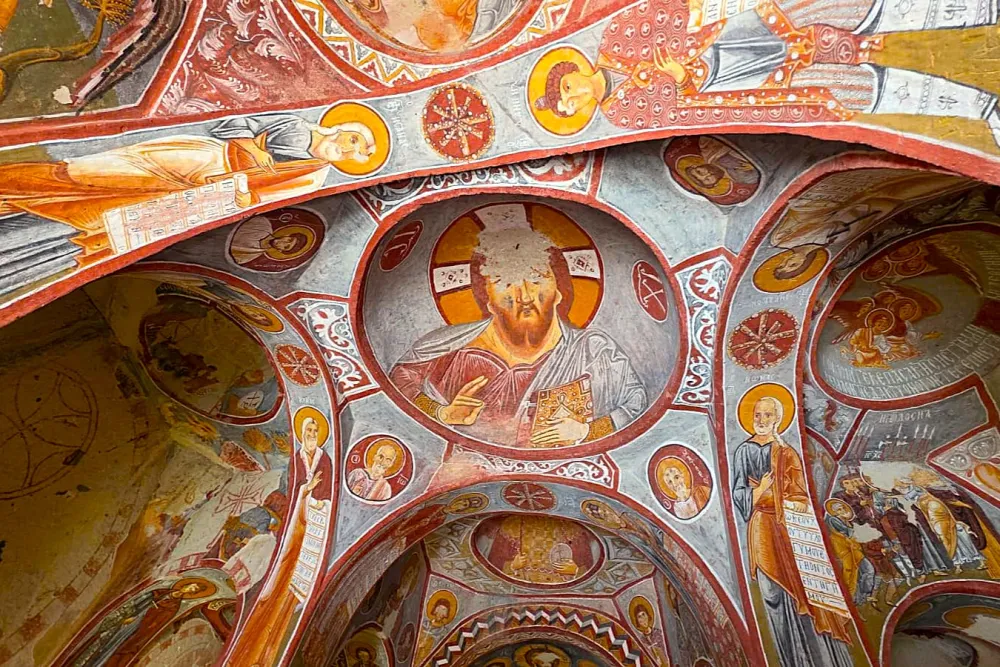
these techniques is Cappadocia. Inside cave churches carved into soft volcanic
rock, visitors can still see: Red ochre decorations, faded saints and biblical
scenes, layers of fresco and secco paintings. Some are simple and symbolic, others
are incredibly detailed. Together, they form an important part of Byzantine
art in Turkey.
Art Created in Darkness and Silence
Many of these paintings were created in spaces lit only by candles or small
openings.
Imagine: Artists working slowly in silence, pigments
mixed by hand, walls becoming stories layer by layer. The process itself feels
almost meditative.
Time as Part of the Artwork
Unlike modern paintings kept in controlled environments, frescoes and secco
paintings live with time.
Humidity, smoke, sunlight, and human presence all leave marks and somehow,
that makes them feel even more human. Their imperfections become part of their
beauty.
A Photographer’s Perspective
Your photos will naturally highlight the textures and atmosphere of these
artworks.
The best compositions often focus on: Cracked
surfaces, faded pigments, details of faces or symbols, light falling across
ancient walls. Especially in Cappadocia, natural shadows and stone textures
create powerful visual depth.
Why Frescoes Still Fascinate Us
Modern technology can create almost anything. Yet
frescoes continue to feel special because they are: Physical, imperfect, deeply
connected to place. They cannot be separated from the walls they belong to. That
connection gives them a unique presence.
Final Thoughts
Some art hangs on walls, frescoes become the wall. And in places across Turkey, these ancient paintings continue to survive quietly — carrying color, history, and memory through centuries of change.