Discover the
Terrace Houses of Ephesus, one of Turkey’s most extraordinary archaeological
sites, revealing how wealthy Romans lived nearly 2,000 years ago.
When people imagine ancient cities, they often think of temples, theaters,
and grand monuments.
But what if you could step inside the homes of the people who once lived
there? That is exactly what makes the Terrace Houses of Ephesus so
extraordinary. Located on the slopes opposite Curetes Street within the ancient
city of Ephesus, these remarkably preserved residences offer one of the most
intimate windows into daily life during the Roman period.
The "Pompeii of Turkey"
The Terrace Houses are often called the "Pompeii of Turkey."
Not because they were buried by a volcano, but because they preserve an
incredible amount of detail about ancient domestic life.
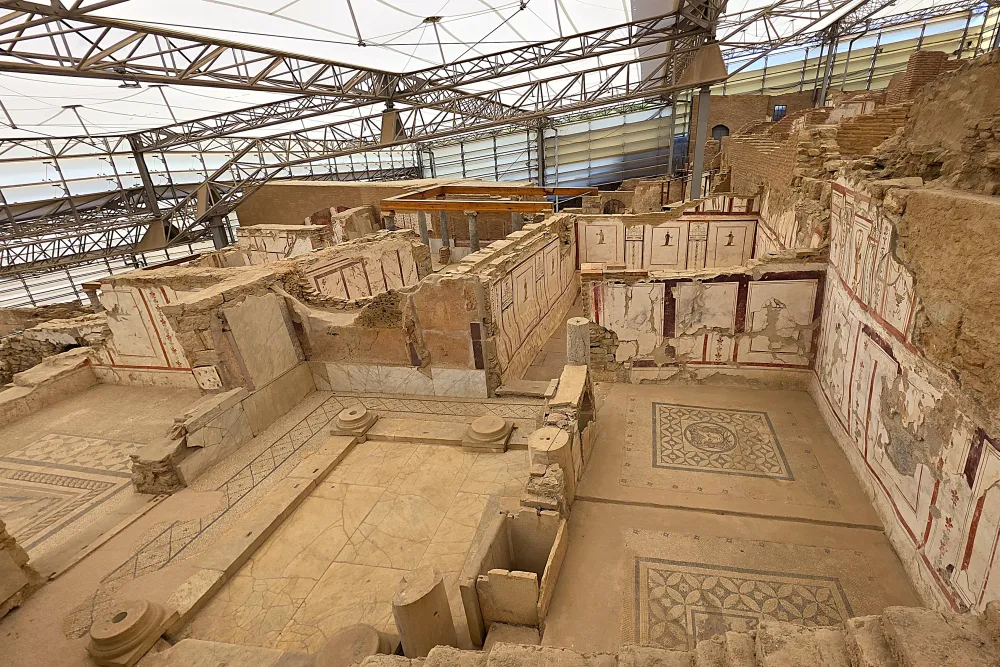
Inside, archaeologists discovered: mosaics, frescoes,
marble decorations, private heating systems, luxury living spaces. Few
archaeological sites in the world allow visitors to see Roman homes with such
remarkable preservation.
Who Lived Here?
The Terrace Houses were not ordinary residences.
They belonged to the wealthiest citizens of
Ephesus: merchants, political leaders, influential families, members of the
Roman elite. Living here meant enjoying one of the most prestigious addresses
in the ancient Mediterranean world. These homes reveal the lifestyle of the
upper class in Roman Ephesus.
A City Within a City
Walking through the Terrace Houses feels very different from exploring the
rest of Ephesus.
Instead of public monuments, visitors encounter: private
courtyards, elegant reception rooms, family living spaces, decorative artwork. Suddenly,
history becomes personal. You are no longer looking at an ancient city — you
are looking at someone's home.
The Stunning Mosaics
One of the highlights of the Terrace Houses is the incredible mosaic work.
Across floors and hallways, intricate designs
still survive: geometric patterns, mythological scenes, decorative motifs. Many
of these mosaics are nearly two thousand years old. They provide a rare insight
into the artistic tastes of wealthy Roman families.
Frescoes That Tell Stories
The walls of the Terrace Houses were once covered with colorful frescoes.
Some depict: mythological figures, architectural
illusions, floral decorations, scenes from daily life
Although time has faded many of the colors, the level of craftsmanship
remains extraordinary. These frescoes are among the finest examples of Roman
wall painting in Turkey.
Ancient Luxury and Innovation
One of the most surprising discoveries is how advanced these homes were.
Many contained: running water, sophisticated
drainage systems, indoor fountains, underfloor heating systems. The Terrace
Houses remind us that ancient Romans enjoyed comforts often associated with
much later periods.
A Photographer’s Perspective
For photographers, the Terrace Houses offer endless opportunities.
The site provides: intricate mosaics, detailed
frescoes, layered architectural perspectives, dramatic lighting under the
protective structure.
Especially focus on: mosaic details, preserved
wall paintings, marble surfaces, elevated views overlooking the excavation area.
The contrast between archaeology and preservation creates powerful visual
compositions.
Why the Terrace Houses Matter
Many ancient sites tell us about rulers and empires. The Terrace Houses
tell us about people.
They reveal: how families lived, how rooms were
designed, what art they appreciated, how wealth was displayed. This human
perspective is what makes the site so fascinating.
Preserving the Past
Today, the Terrace Houses are protected by a large modern shelter designed
to preserve the delicate remains beneath. Visitors can walk through elevated
pathways and observe ongoing conservation work. The site continues to provide
archaeologists with new discoveries and insights into ancient urban life.
One of the Most Important Sites in Ephesus
Many visitors come to Ephesus to see: the Library
of Celsus, the Great Theatre, the Temple of Hadrian. But those who explore the
Terrace Houses often leave with a deeper understanding of the city. Because
this is where Ephesus feels most alive.
Final Thoughts
Ancient cities are often remembered for their monuments. The Terrace Houses
are remembered for their humanity. Their mosaics. Their frescoes. Their quiet
rooms once filled with everyday life.
And nearly two thousand years later, they still allow us to walk through the private world of Roman Ephesus.