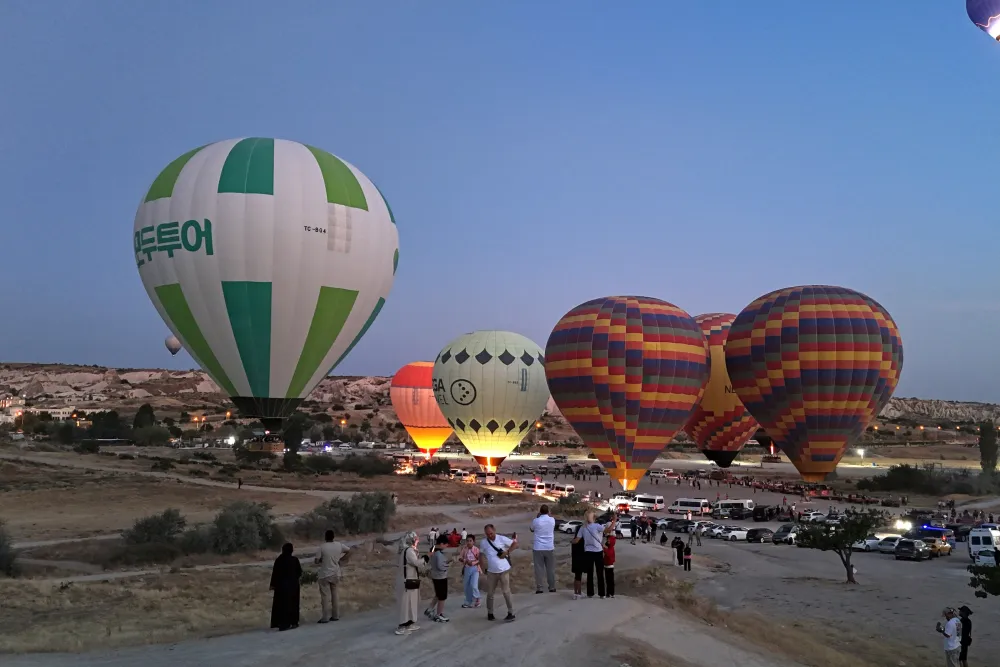
Most travelers arrive in Cappadocia with a mental checklist. Fairy chimneys. Cave hotels. Hot air balloons drifting across the sunrise sky. And while all of those experiences are undeniably memorable, Cappadocia has another side—one that reveals itself only when you slow down and step away from the familiar routes.
This is how many visitors first encounter the Red Church.
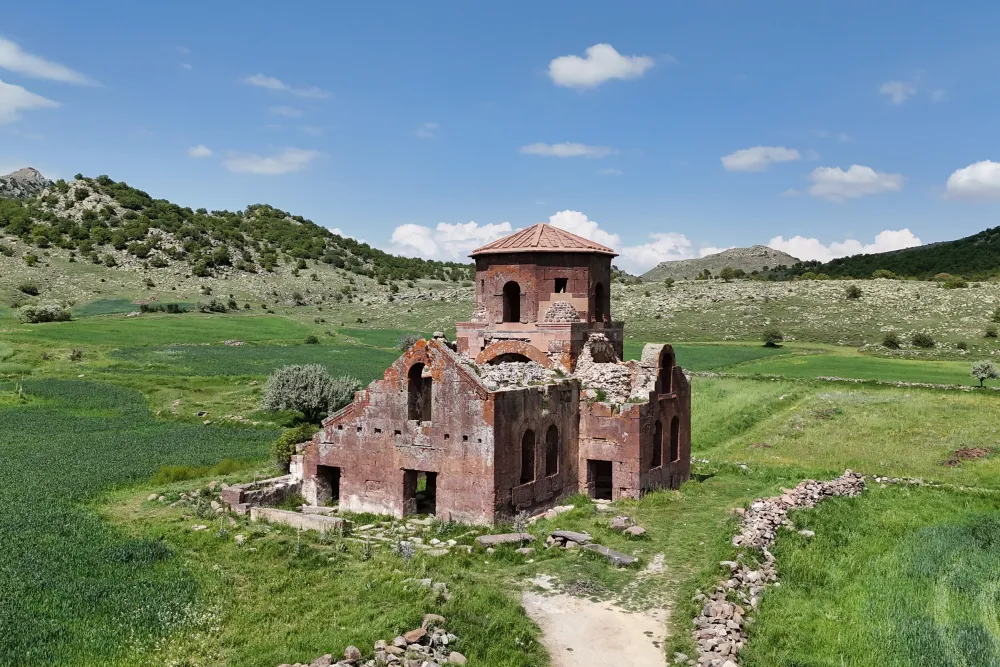
There are no ticket booths here. No crowds. No souvenir stalls. Just a solitary stone church standing quietly in the open landscape near Güzelyurt, surrounded by wind, light, and time.
Unlike the famous rock-cut churches carved into cliffs and valleys, the Red Church was built, not carved. Its walls rise from the earth in warm shades of red and rust, shaped from local volcanic stone. As the sun moves across the sky, the building subtly changes color—sometimes deep and earthy, sometimes glowing softly, especially toward the evening.
It feels less like a monument and more like something that has simply always been there.
Scholars believe the Red Church dates back to the late 5th or early 6th century, a time when Christianity was still defining its physical and spiritual presence in Anatolia. The church follows a cross-shaped plan, crowned by a modest central dome, with a design that favors balance and purpose over ornament.
When you step inside, the world seems to lower its volume.
There are no surviving frescoes to draw your attention, no dramatic visual centerpiece. Instead, what you notice is the space itself—the way sound behaves, the coolness of the stone, the filtered daylight finding its way inside. It is an experience that feels intimate, almost personal, as if the building is asking you to pause rather than observe.
For many visitors, the most striking feature of the Red Church is its silence. This is not the silence of abandonment, but of continuity. Standing here, it becomes easy to imagine monks, travelers, or villagers seeking shelter or prayer centuries ago—drawn not by grandeur, but by solitude.
In a region celebrated for visual drama, the Red Church offers something subtler: emotional depth.
Reaching the Red Church requires intention. Located about 15 to 20 minutes by car from Güzelyurt, it is not accessible by public transportation and rarely included in standard group tours. Most visitors arrive by private vehicle, often combining the visit with nearby valleys or historic villages.
That small effort makes all the difference. The journey itself reinforces the feeling that this is a place meant to be discovered, not consumed.
The Red Church resonates most with travelers who value:
-Meaningful, slow travel experiences
-Sites that feel personal rather than curated
-Early Christian history and sacred architecture
-Quiet places that encourage reflection
You do not leave the Red Church with a long list of facts or photographs. What stays with you is a mood—a sense of having touched something honest and unfiltered.
In Cappadocia, where nature and history often compete for attention, the Red Church reminds us that sometimes the most powerful stories are told not through spectacle, but through stillness.