Tulips in Turkey, their meaning in Ottoman culture, and why tulip designs
are still seen everywhere today. There are symbols that quietly define a place.
You don’t always notice them at first — but once you do, you start seeing them
everywhere. In Turkey, that symbol is the tulip.
A Flower That Feels Familiar
Walk through Istanbul, and you’ll notice tulips in unexpected places. On
tiles, on textiles, on ceramics, in gardens and public parks. They appear again
and again — not by coincidence, but by memory. The story of tulips in Turkeyis deeper than most people realize.
Not From Holland, But From Anatolia
Many people associate tulips with the Netherlands. But the truth is: Tulips
originally spread to Europe from Anatolia. During the Ottoman Empire, tulips
were already being cultivated, admired, and celebrated. They were not just
flowers — they were a symbol of elegance, refinement, and beauty.
The Tulip Era (Lale Devri)
In the early 18th century, the Ottoman Empire
entered a period known as the Tulip Era. It was a time of: art and
culture, architecture and design, gardens and leisure. Tulips became a central
element of life among the elite. They were: grown in palace gardens, featured
in poetry, used in decorative arts. This is where the Ottoman tulip culturereached its peak.
A Symbol Beyond Beauty
In Turkish culture, the tulip is more than
decoration, it carries meaning. Its shape, often simple and upright, has been
associated with: harmony – perfection – spiritual balance. In Ottoman art,
tulips were stylized into elegant forms — not realistic, but symbolic. This is
why you still see tulip patterns in Turkish design today.
Why Tulips Are Everywhere in Design
Once you notice tulips, you begin to see them
across different forms: Iznik tiles, mosque decorations, carpets and textiles, ceramics
and everyday objects. This repetition is not random, it’s a continuation of
tradition. A visual language that connects past and present.
A Season That Transforms the City
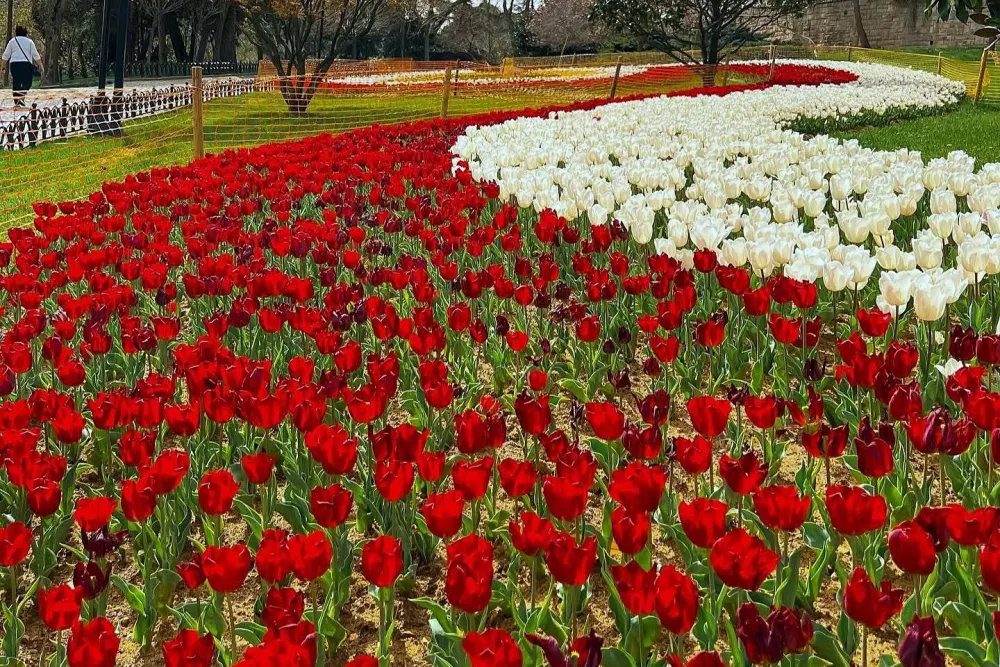
In spring, Istanbul becomes something else
entirely. Tulips bloom across the city: in parks, along streets, in carefully
designed gardens. Colors appear everywhere — reds, yellows, purples, whites. This is when the story of tulips becomes
visible again.
A Moment in Bloom
A tulip doesn’t need a grand setting, it stands on its own — simple,
balanced, complete. That’s the essence of tulips in Turkish culture: quiet
elegance.
More Than a Flower
Tulips are not just part of nature in Turkey, they
are part of identity. They connect: Ottoman history, artistic expression, everyday
life and somehow, they remain relevant — even now.
Learning to Notice
Like many things in travel, tulips are easy to overlook until you stop. Look
closer and realize they’ve been there all along.
Final Thoughts
Some symbols are loud, some are subtle. The tulip belongs to the second. It doesn’t demand attention — but once you see it, you understand something deeper about the place you’re in.